

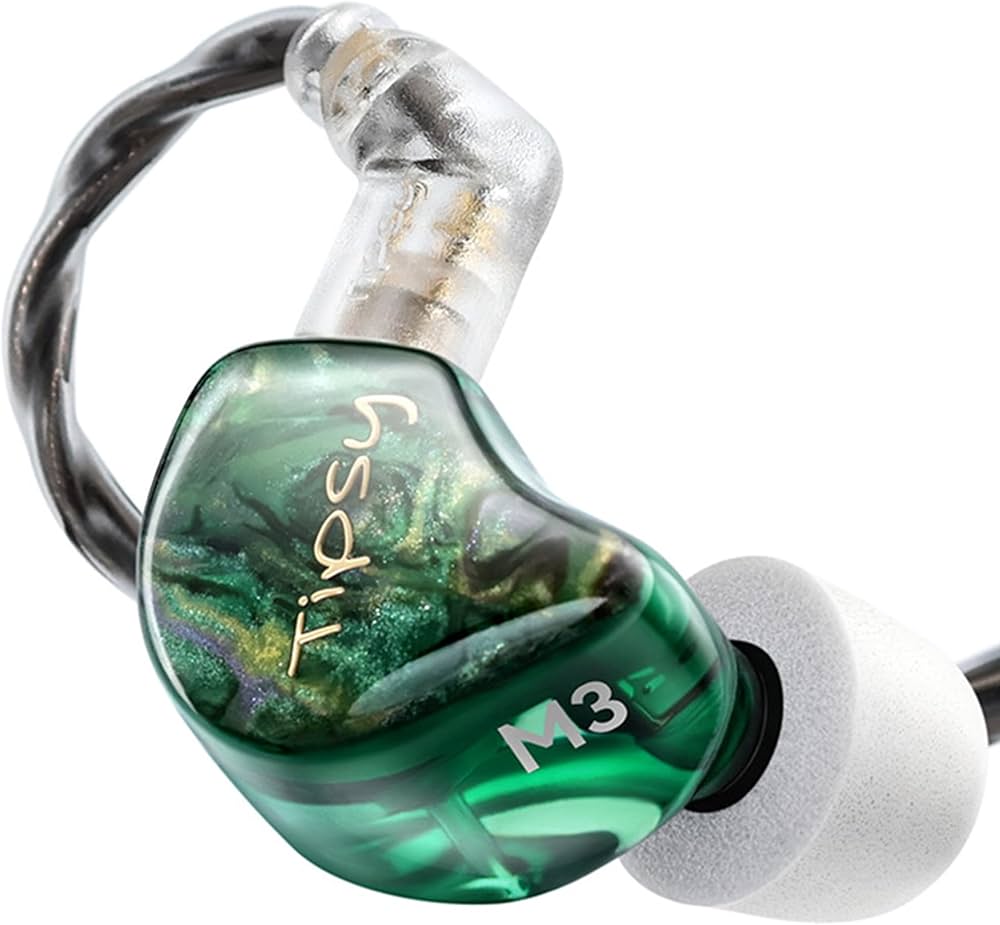
Explore the Tipsy M3 in-ear monitors in our editorial review. Designed for musicians, producers, and audio enthusiasts, find out if the M3s deliver on professional comfort, isolation, and superior sound quality.
Tipsy M3 IEM Review: Pro-Level Sound for Serious Listeners
Introduction
Professional-grade in-ear monitors (IEMs) often promise both superb sound and superior comfort for performers, audio engineers, and dedicated hobbyists. The Tipsy M3 claims to deliver studio-quality accuracy, ergonomic fit, and impressive isolation at a price approachable for advanced users and aspiring professionals alike.
This review goes beyond promotional claims to objectively assess the M3’s sonic fidelity, comfort, and practical value—making it essential reading for vocalists, musicians, and anyone seeking serious in-ear monitoring.
Overview and Unboxing
The Tipsy M3 targets a discerning audience: touring professionals, producers, “proumers,” and skilled hobbyists demanding accurate in-ear audio. While not a budget choice, the M3 provides multiple professional-grade accessories, including three pairs each of silicone (small, medium, large) and memory foam eartips, a sturdy braided cable, a 3.5mm connector (with 6.3mm adapter), and a hard plastic storage case. The unboxing experience is thoughtful, offering durability and style, with a practical insert and even an on-brand coaster.
Comfort and Fit
After hours of use, the M3’s low-profile shape and generous eartip options provide all-day comfort and a stable fit that remains secure—on stage or in the studio. The ergonomic shell design eliminates distractions during performance, while memory foam tips boost isolation for critical monitoring environments.
Sound Quality
Frequency Response and Tuning
The M3 delivers impressive accuracy: its measured sound profile hovers within +/-5dB, rivaling the precision-earmarked by many project studios for balanced mixing. Frequency sweeps indicate a minor coloration—primarily in the upper frequencies—but nothing that undermines their use for mixing or performing in high-stakes settings.
Real-World Listening
When listening to music, the M3 produces a warm, articulate low end without exaggerating bass. The midrange retains strong detail and transparency, providing a faithful representation of vocals and instruments in complex arrangements. Subtle upper-frequency variations are present but by design—allowing long listening periods without fatigue or harshness.
Graphs show a slightly overstated low-end, but subjectively, the tuning avoids the typical boominess found in less sophisticated IEMs. Midrange delivery excels, enabling musicians and vocalists to hear themselves naturally in mixes.
Vocals and Speech
Both male and female vocals are rendered faithfully, with slight dropouts above 14–15kHz practically unnoticeable in real-world use. The accurate representation of vocal tone aids both performers and engineers in monitoring and mixing. Spoken word comes through clear and comfortable—crucial for voiceover talent and broadcast use.
Gaming and Spatial Performance
While not a primary target market, the M3 also provides a surprisingly immersive gaming experience. Imaging and soundstage are very competitive for an IEM, and detailed spatial representation of effects and dialogue make it a viable choice for professional gamers as well.
Build Quality
The M3 shell employs robust plastic construction with well-thought-out shaping for ergonomics. The included cable is flexible yet sturdy, and all connectors are reinforced. The hard case, memory foam tips, and overall build convey a premium sensibility that matches its professional aspirations.
Pros and Cons
Pros:
- Accurate, nearly reference-grade tuning in a compact IEM
- Comfortable fit for long sessions with robust isolation
- Excellent midrange for vocals and critical detail
- Professional included accessories (multiple tips, strong case, adapter)
Cons:
- Not a budget option—aimed at serious users
- Subtle roll-off in extreme upper frequencies
Final Verdict
The Tipsy M3 IEM fulfills its pro-focused promise, delivering sound quality, clarity, and wearing comfort that satisfy the demands of both performers and studio professionals. Its neutral, detailed tuning makes it a reliable mixing, monitoring, and performing tool—or a high-end upgrade for personal listening. If professional accuracy and fit are priorities, the Tipsy M3 deserves a close look.
Related posts:
 Pioneer HDJ-S7 DJ Headphones Review: Accurate Sound Beyond the Booth
 Xvive U4 Wireless & T9 In-Ear Monitors Review: Next-Level Stage Freedom?
 Mackie MC250 Studio Headphones Review: Entry-Level Monitoring Tested
 V-MODA Crossfade M-100 Master Headphones Review: Studio Sound, Club Ready
 AIAIAI TMA-2 DJ Headphones: Modular Design Meets Pro Sound
 M-AUDIO HDH40 Headphone Review: A Real Budget Option?
 Sony MDR-M1 Professional Headphone Review: A New Closed Back Studio Standard
 Status Audio CB-1 Headphones Review: Professional Studio Performance at an Accessible Price