

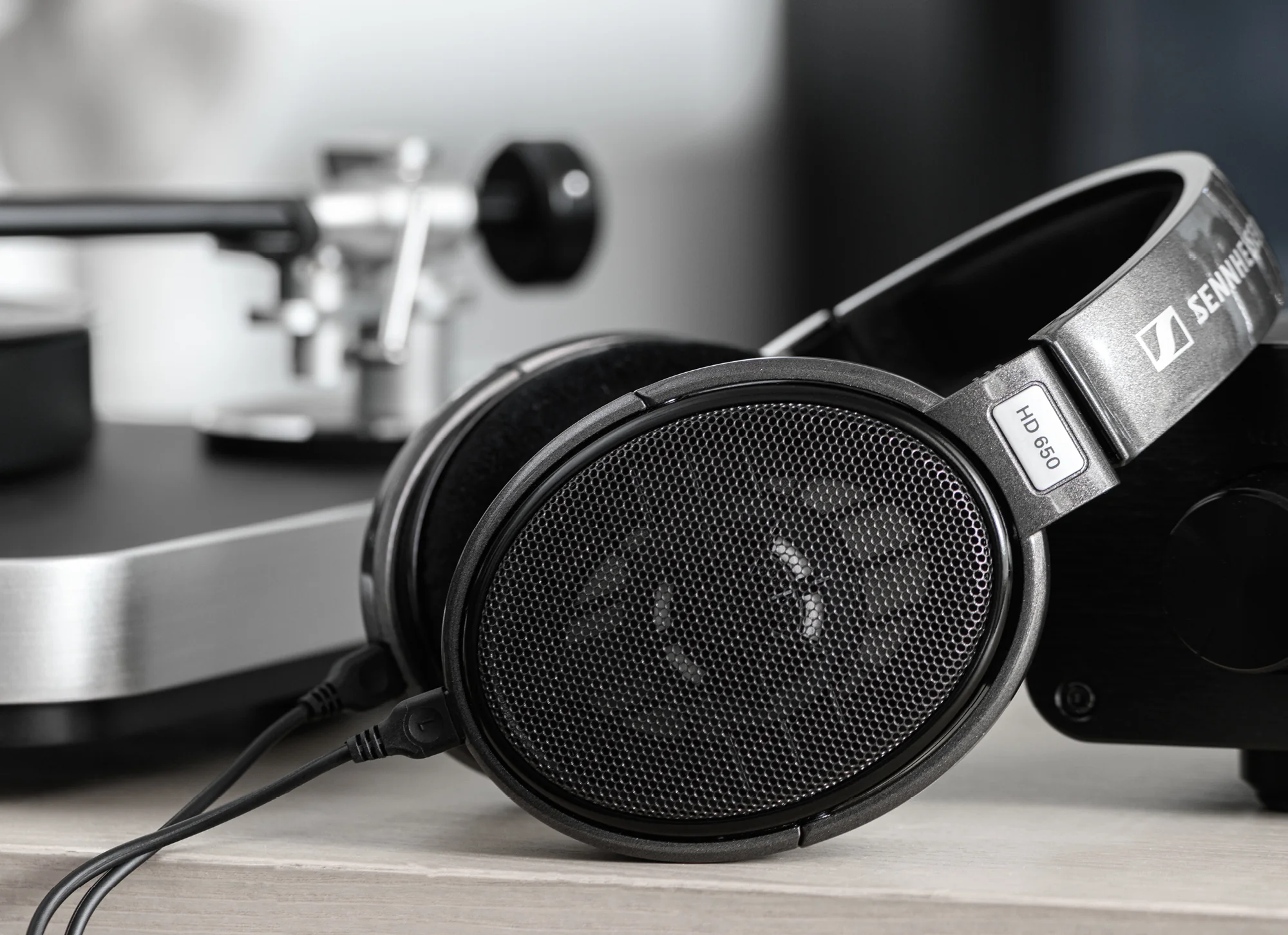
Our in-depth Sennheiser HD650 review after one year of use. Explore sound quality, build durability, mixing performance, and whether these legendary headphones justify the upgrade from HD600.
Sennheiser HD650 Review: One Year with a Modern Classic
Introduction: Living with a Legend
The Sennheiser HD650 enjoys legendary status among audio professionals and enthusiasts. After over a year of intensive use across multiple applications, this review provides insights that only extended ownership can reveal. As a long-time HD600 user seeking to understand whether the HD650 represents a worthwhile upgrade, the testing approached these headphones with both curiosity and skepticism.
This independent review, based on personally purchased headphones rather than manufacturer samples, offers unbiased perspective on the HD650’s strengths, limitations, and real-world performance.
Sound Quality: Detailed Analysis
Frequency Response Characteristics
Sine wave sweep analysis reveals several interesting characteristics. Frequencies below 100Hz show slight rolloff, though not to the extent that bass feels absent. Interestingly, a subtle boost appears in the 100-200Hz range, explaining the “punchy” character many users describe.
The midrange remains remarkably consistent, providing accurate reproduction of the frequency range most critical for music and speech. However, the low and mid-treble regions exhibit notable deviations with peaks and valleys affecting frequencies differently. These variations, while measurable, don’t throw the overall tonal balance dramatically off-course.
Music Performance
Music testing demonstrated the HD650’s generally balanced approach. Low and mid frequencies show minimal deviation from neutral, while treble frequencies reveal more significant variation. The logarithmic analysis shows these peaks and valleys clearly, though their perceptual impact remains moderate.
The linear analysis, with its enhanced resolution, makes the variations appear more dramatic than they sound. Understanding this distinction helps set appropriate expectations: while measurements show deviations, the listening experience remains balanced and musical.
Isotope audio lens overlay analysis confirmed that the HD650 follows the original recording’s profile closely through most of the frequency spectrum, with divergence appearing primarily in treble regions. For mixing applications, these characteristics become learnable, allowing experienced users to compensate instinctively.
Vocal Reproduction
Male vocals receive realistic treatment from the HD650. The headphones render male voices naturally with a slight enhancement in presence and clarity. However, a significant dip around 5kHz tends to underemphasize sibilance, which becomes important for mixing applications.
When de-essing vocals, the HD650 may cause under-correction because the headphones themselves reduce sibilant frequencies. Engineers using these headphones should verify de-essing on other monitoring systems to ensure appropriate levels.
Female vocals show similar characteristics, with generally accurate reproduction marred by the sibilance reduction. For listening purposes, this creates a smooth, non-fatiguing presentation. For production work, it requires awareness and compensation.
Spoken Word Applications
Spoken word testing revealed the same sibilance characteristics observed with vocals. The overall frequency balance handles speech well, with deviations appearing primarily in the higher frequencies where sibilance resides.
For podcast editing or audiobook production, the HD650 proves absolutely usable once you understand its characteristics. The slightly dulled sibilance can actually reduce fatigue during long editing sessions, though final checks on other systems remain advisable.
Gaming Performance
Despite being professional studio headphones, the HD650 sees use in gaming applications. Testing across various game types revealed both strengths and limitations.
The frequency response handles game audio well, rendering sound effects, music, and dialogue with clarity and balance. Transient response impresses, with explosions and gunfire delivering appropriate impact without overwhelming other sounds.
However, soundstage proved surprisingly intimate. Unlike some open-back headphones that create expansive spatial impressions, the HD650 positions most sounds within the head. This characteristic, while not problematic for studio work, reduces the immersive quality desirable for gaming.
For competitive gaming where precise positioning matters more than immersion, the HD650 functions adequately. For immersive single-player experiences, other options might provide more engaging spatial presentation.
Soundstage and Imaging: Detailed Assessment
Imaging Performance
Imaging accuracy measures excellent across the stereo field. Channel balance proves consistent, and group delay remains minimal and inaudible. The HD650 places sounds precisely where recordings intend them, making these headphones reliable for mixing and critical listening.
Objective measurements confirm subjective impressions: the HD650 images accurately enough for professional applications. Panning decisions, stereo width adjustments, and spatial effects translate reliably through these headphones.
Soundstage Limitations
Perhaps the most surprising discovery during long-term testing was the HD650’s relatively closed-in soundstage. Even compared to the already-intimate HD600, the HD650 feels more constrained with soundstage positioned entirely within the head.
For an open-back headphone, this limited soundstage proves unexpected. Many open-back designs create more expansive spatial impressions, pushing soundstage boundaries beyond the head’s physical space. The HD650 doesn’t provide this effect to the same degree.
This limitation doesn’t prevent professional use—many successful mixes come from headphone-based production. However, those expecting speaker-like soundstage spaciousness may feel disappointed.
Build Quality: Durability Report
Long-Term Construction Assessment
After over a year of regular use, the HD650’s build quality has proven excellent. The combination of plastic and metal materials shows no degradation, loosening, or failure. Sennheiser’s engineering choices support long-term reliability.
The adjustment mechanism maintains positive locking with no slippage. The headband and ear cup connections show no signs of wear or weakening. For professional use where headphones see daily abuse, this durability matters enormously.
Comfort Evaluation
The ear pads utilize soft materials that have maintained their structure and comfort throughout the year. No flattening or degradation has occurred, and comfort remains consistent with new condition.
The headband padding similarly shows minimal wear. The clamping force, while initially firm, hasn’t loosened significantly. This sustained clamping ensures consistent seal and positioning for reliable sound quality.
Extended listening sessions remain comfortable, with the headphones distributing weight and pressure effectively. Heat buildup stays minimal for an over-ear design, though they naturally warm more than on-ear or open-back alternatives.
Cable Quality
The upgraded cable proves to be a standout feature. The material feels premium with a soft, supple character that avoids kinking and tangling. The cable quality exceeds expectations for the price point.
While the cable isn’t designed for user replacement during normal use, it can be serviced if necessary. The connection points show no loosening or degradation after a year of regular connection and disconnection.
The included 3.5mm adapter provides secure connection, and pictures confirm its quality matches the overall package standards.
Technical Specifications
Key specifications worth noting include:
Impedance: 300 ohms, which might suggest difficult amplification requirements. However, the HD650 proves reasonably efficient, working well with quality audio interfaces and even some high-output consumer devices. Dedicated headphone amplification extracts maximum performance but isn’t strictly required for acceptable results.
Matched Drivers: Sennheiser individually matches drivers in each ear cup, ensuring consistent response and channel balance. This attention to detail supports professional applications where channel accuracy matters.
Impedance-Balanced Cable: The cable design maintains impedance balance, contributing to accurate imaging and channel matching. This engineering detail, while invisible to users, demonstrates Sennheiser’s commitment to performance.
These specifications combine to deliver the consistency and accuracy professionals require for mixing, mastering, and critical listening applications.
Professional Applications
Mixing and Mastering
For mixing applications, the HD650 delivers professional-grade performance once you learn its characteristics. The frequency response deviations, while measurable, remain consistent and predictable. Experienced users compensate instinctively, making accurate decisions despite the headphones’ personality.
The sibilance reduction requires awareness during vocal mixing. Checking mixes on other monitoring systems helps ensure proper de-essing and high-frequency treatment. Beyond this consideration, the HD650 reveals mix balance, spatial positioning, and tonal issues reliably.
The open-back design eliminates resonances and pressure buildup that can color closed-back headphones. This cleaner presentation aids long-term listening and accurate assessment.
Critical Listening
For analytical listening, quality control, and detailed audio evaluation, the HD650 provides sufficient resolution and accuracy. The neutral midrange and controlled bass response reveal recording quality and production decisions clearly.
The slightly warm character prevents fatigue during extended analytical sessions, a consideration for professional workflows involving hours of critical listening.
HD650 vs. HD600: The Upgrade Question
Having used the HD600 extensively before testing the HD650, the upgrade question becomes central. After a year with both, the conclusion proves nuanced.
The HD650 offers slightly better transient response, rendering percussive sounds and dynamic changes with marginally improved accuracy. For genres heavy in drums, percussion, or dynamic contrast, this improvement proves noticeable.
However, the soundstage compression compared to the HD600 disappoints. The HD600’s already-intimate soundstage feels more open than the HD650’s more constrained presentation.
For existing HD600 users, the upgrade doesn’t provide compelling improvements justifying the investment. The differences, while present, don’t transform the listening or mixing experience significantly. Learning either headphone thoroughly proves more valuable than switching between them.
For new purchasers choosing between the two, either proves capable. The HD650’s slightly better transient response and warmer character appeal to some, while the HD600’s pricing and slightly more open soundstage attract others.
Who Should Buy the HD650?
The Sennheiser HD650 suits specific user profiles:
Audio Professionals: Engineers, producers, and mixers seeking reference open-back headphones will find the HD650 capable for critical work. The accuracy, detail, and learnable characteristics support professional decision-making.
Audiophile Listeners: Music enthusiasts wanting natural, detailed sound without excessive coloration will appreciate the HD650’s balanced presentation. The slightly warm character prevents fatigue while maintaining engagement.
Long-Term Investment Seekers: Users wanting headphones that will last years with consistent performance benefit from the HD650’s proven durability and established reputation.
Critical Listening Enthusiasts: Those evaluating recording quality, comparing formats, or analyzing audio in detail gain a reliable tool in the HD650.
Who Might Look Elsewhere?
Some users might find better matches in alternative headphones:
Soundstage Priorities: Those wanting expansive, out-of-head soundstage presentation should explore other options. The HD650’s intimate staging won’t satisfy this preference.
Gaming Focus: Gamers prioritizing immersion over accuracy might prefer headphones with more spacious soundstage characteristics.
Existing HD600 Owners: Current HD600 users won’t find compelling reasons to upgrade. The improvements don’t justify replacing fully-functional HD600 headphones.
Portable Use: The HD650’s open-back design, full-size format, and lack of folding mechanism make portability impractical. Those needing travel headphones should consider closed-back, portable alternatives.
Value Assessment
The HD650 commands pricing reflecting its professional positioning and Sennheiser heritage. However, the performance and build quality justify the investment for appropriate use cases.
The long-term durability means these headphones can serve for years or even decades with basic maintenance. Replaceable parts ensure serviceability, preventing total replacement when components wear out.
For professional users, the HD650’s cost represents a small fraction of studio investments while providing reliable monitoring that influences every production decision. This perspective makes the pricing reasonable rather than expensive.
Final Verdict: After One Year
After extensive use across multiple applications, the Sennheiser HD650 proves its legendary reputation largely deserved. The sound quality, build durability, and professional capability support years of reliable service.
The slightly warm tonality, accurate midrange, and controlled bass create a balanced presentation suitable for extended listening without fatigue. The frequency response deviations, while measurable, remain learnable and don’t prevent professional-grade work.
However, the surprisingly intimate soundstage and the lack of compelling improvements over the HD600 temper enthusiasm. For existing HD600 users, staying with known headphones makes more sense than switching. For new buyers, either the HD600 or HD650 provides excellent performance, with choice depending on specific preferences and budget.
The HD650 earns a strong recommendation for those needing accurate open-back headphones for professional or enthusiast applications, with the caveat that soundstage expectations should remain moderate. These headphones excel at what they’re designed for: accurate, detailed monitoring in a durable, comfortable package.
For the right user, the HD650 becomes a long-term companion that shapes countless listening and production experiences. The year-long testing confirmed that while perfection remains elusive, the HD650 comes remarkably close to the ideal of a versatile, accurate, durable reference headphone.
Related posts:
 Sennheiser HD600 Headphones Review: Do They Still Hold Their Legendary Status in 2025?
 Sennheiser HD599 SE Headphone Review: Accurate Bass & Open Back
 Status Audio CB-1 Headphones Review: Professional Studio Performance at an Accessible Price
 Superlux HD681 Headphones Review: Are These Semi-Open Headphones Still Worth It in 2025?
 Sennheiser HD200 Pro Headphones: Detailed Review and Audio Tests
 Shure SRH1840 Open-Back Headphones Review: Professional Mastering Excellence
 AKG K702 Reference Studio Headphones Review: Professional Studio Sound at Mid-Tier Pricing
 One Audio Monitor 80 Headphones Review: Did OneOdio Really Make These Open-Back Budget Champions?