

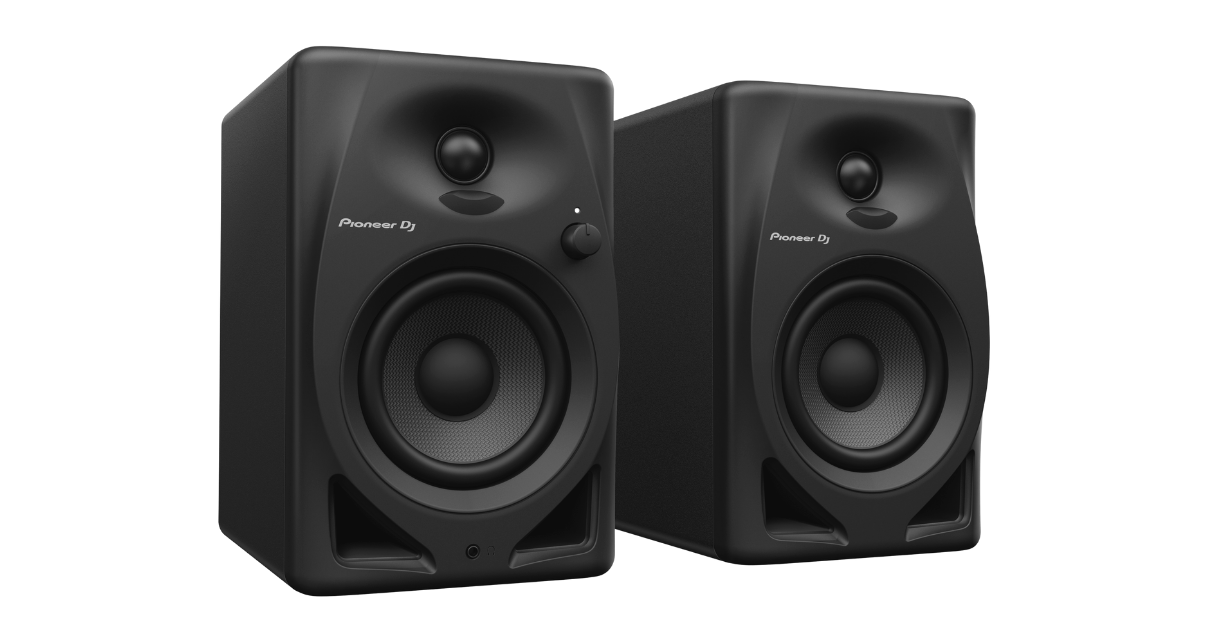
In-depth review of the Pioneer DJ DM-40D active monitor speakers featuring DJ/Producer mode switching, DSP processing, and front-panel controls. Analysis of sound quality, features, and value compared to the original DM-40.
Pioneer DJ DM-40D Monitor Speakers Review: DJ/Producer Speakers with Mode Switching
Purpose-Built Monitors for DJ and Production Use
The Pioneer DJ DM-40D active monitor speakers represent an updated version of the popular DM-40 series, designed specifically for DJs who also produce music or producers who DJ. The distinctive “D” suffix refers to the addition of a DJ/Producer mode switch on the rear panel—a feature enabled by integrated DSP (Digital Signal Processor) technology that tailors the sound signature for different applications.
Priced at approximately £199 (UK) at launch, these sit in the entry-to-mid-level category for active studio monitors, targeting users with home studios, bedroom production setups, or DJ practice spaces rather than professional recording facilities.
Primary and Secondary Speaker Configuration
Unlike some monitor pairs where both units are identical with independent power and controls, the DM-40D uses a primary/secondary architecture. The primary speaker contains all the electronics, amplification, inputs, outputs, and controls. The secondary speaker is essentially a passive unit connected to the primary via included speaker wire.
This design simplifies setup but means the speakers must be positioned with the primary unit accessible, as that’s where all adjustments occur.
Front Panel: User-Focused Controls
The primary speaker’s front panel demonstrates thoughtful ergonomics with controls positioned for easy access:
Volume Knob: Located prominently on the front, the volume control adjusts both speakers simultaneously without requiring users to reach behind equipment—a seemingly small convenience that proves significant in regular use.
Headphone Jack: A 3.5mm headphone output is also front-mounted. Plugging in headphones automatically mutes the speaker output, enabling quick switches between speaker and headphone monitoring without cable swapping or software configuration. This proves particularly useful for late-night sessions when silent monitoring becomes necessary.
Driver Configuration: Each speaker features a 5-inch woofer and 1-inch tweeter. The tweeter sits in a specially molded waveguide designed to disperse high frequencies across a wider listening area, reducing the “sweet spot” narrowness that plagues some monitors.
Front Port: The bass reflex port is positioned on the front panel rather than rear-ported. Front porting provides important advantages—speakers can be positioned closer to walls without bass response suffering from port blockage, a critical consideration for compact home studios where space is limited.
Rear Panel: Connections and Controls
The primary speaker’s rear panel contains all the connectivity and power infrastructure:
Audio Inputs: Two input options accommodate different source equipment:
- 3.5mm (⅛-inch) stereo mini-jack input
- Stereo RCA inputs
Having both input types eliminates the need for adapters in many situations. DJ controllers commonly feature RCA outputs, while laptops and some interfaces use 3.5mm outputs.
Speaker Terminals: Spring-loaded speaker terminals accept the included “bell wire” (basic speaker cable) that connects the primary and secondary speakers. The secondary speaker has identical terminals for receiving the connection.
Power Switch: A standard on/off rocker switch controls power to both speakers.
AC Power Input: The power transformer is integrated into the speaker housing (no external power brick), keeping cable clutter minimal. The AC cable plugs directly into the speaker.
DJ/Producer Mode Switch: The defining feature of the “D” variant—a small toggle switch selecting between two DSP-optimized sound profiles.
DJ/Producer Mode: What It Actually Does
The DJ/Producer mode switch represents the primary differentiator between the DM-40D and the original DM-40 model. Understanding what this switch actually changes is crucial to assessing its value.
The DM-40D incorporates DSP technology that actively processes the incoming audio signal. This processing optimizes the sound for the physical limitations of the relatively small drivers and cabinet size, ensuring the speakers deliver the best possible sound quality given their inherent constraints.
Pioneer DJ has programmed two distinct DSP profiles into the system:
DJ Mode: This profile emphasizes low-frequency response, providing enhanced bass presence and impact. DJs typically prefer more pronounced bass that creates physical sensation and makes beat-matching and bass-heavy mixing more engaging and enjoyable. This mode prioritizes fun and excitement over strict accuracy.
Producer Mode: This profile aims for flatter, more neutral frequency response with enhanced mid-range precision. Music producers need to hear individual mix elements clearly to make accurate mixing, EQ, and arrangement decisions. Enhanced mid-range clarity helps identify competing frequencies and make precise adjustments.
In practice, the difference between modes is subtle rather than dramatic. It’s not comparable to switching between completely different speakers—rather, it’s a tuning adjustment that slightly shifts the tonal balance. Some users might consider this feature somewhat gimmicky, more marketing department than engineering revolution, though having the option is preferable to not having it.
Some professional monitors offer multiple EQ switches (low, mid, high frequency adjustments) that enable room tuning—compensating for acoustic characteristics of the specific space where monitors are placed. The DM-40D’s single DJ/Producer switch doesn’t provide this degree of acoustic calibration, instead offering application-specific voicing.
Sound Quality Evaluation
The DM-40D deliver genuinely impressive sound quality for their price point and size class. Both DJ and Producer modes sound excellent, with the sonic differences between modes noticeable but not extreme. The speakers handle various musical genres competently, maintaining clarity even at higher volume levels without obvious distortion or driver strain.
Bass response is respectable given the 5-inch woofer size. These won’t reproduce sub-bass with the authority of 8-inch or 10-inch monitors, but the bass that’s present sounds tight and controlled rather than muddy or boomy. The front port design likely contributes to bass definition by reducing port turbulence.
The high-frequency response sounds clear and extended without harsh sibilance or fatigue during extended listening. The waveguide design for the tweeter appears effective at maintaining consistent sound across a reasonable listening area rather than requiring precise head-in-vise positioning.
Included Cable and Connectivity
The speakers ship with a combination cable featuring different connectors on each end:
- 3.5mm stereo mini-jack on one end
- Stereo RCA connectors on the other end
This reversible design provides flexibility—users can connect the RCA end to equipment with RCA outputs and leave the 3.5mm end available, or flip it around to connect the 3.5mm end to smartphone or laptop headphone outputs while using the RCA end on the speakers.
Both input types (RCA and 3.5mm) on the speaker rear panel can be used simultaneously, with both signals mixing internally. This enables keeping two source devices permanently connected—switching between sources by simply activating the desired source device rather than swapping cables.
Final Verdict
The Pioneer DJ DM-40D blend the needs of DJs and producers into a compact speaker package. DSP-driven mode switching provides tonal tailoring without overcomplicating setup, while front-panel controls enhance usability. Proper isolation and positioning unlock clear, balanced audio ideal for home studios and DJ practice spaces. For those straddling mixing and gigging, the DM-40D offer a versatile, space-efficient solution.
Related posts:
 Pioneer DJ DM-50D-BT Active Monitor Speakers Review: Bluetooth Convenience for Home DJs
 Adam Audio A4V Studio Monitors Review: Smart Speakers with Custom Sound for DJs and Producers
 Roland DJ-808 Review: The Ultimate Controller for Producer-DJs
 AIAIAI Unit-4 Wireless Speaker Review: The Ultimate Portable Studio Monitor for DJs and Producers
 Adam Audio H200 Review: Producer-Oriented Closed-Back Headphones for DJs
 Numark Mixstream Pro Review: Built-In Speakers and Unbeatable Value
 IK Multimedia iLoud Micro Monitor Pro Review: Big Calibration in a Tiny Package
 Serato DJ Club Kit and HID Mode Review: Professional Club Integration for DJs