

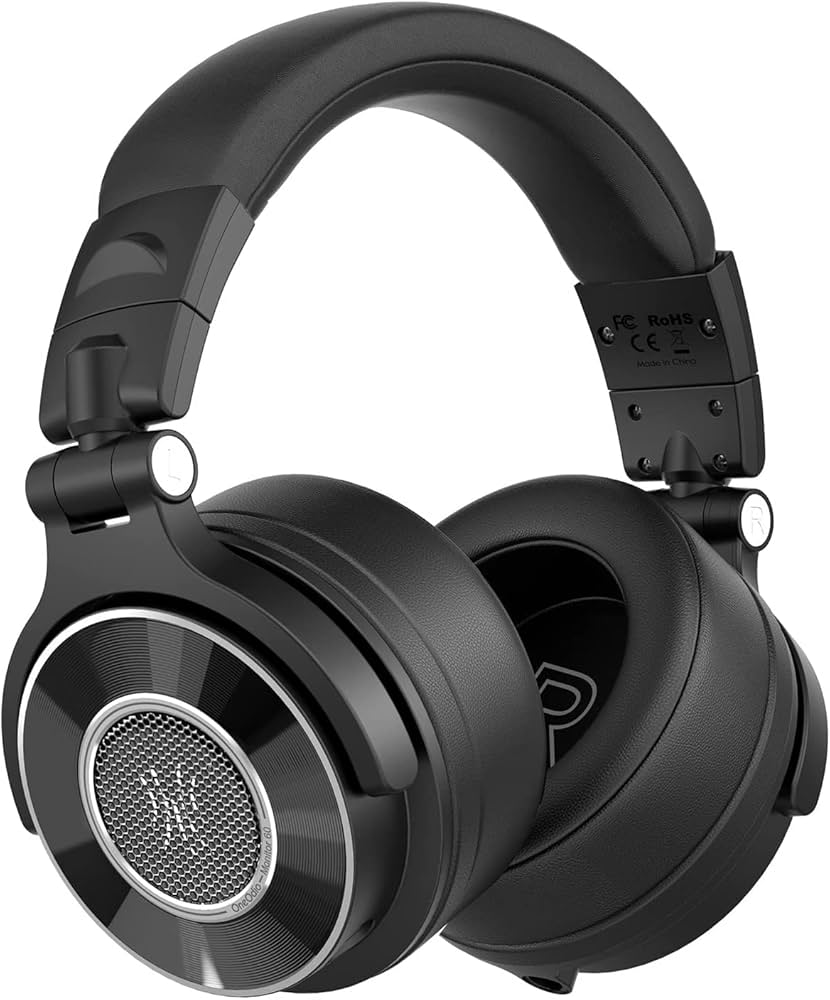
Detailed review of the OneOdio Monitor 60 closed-back studio headphones. Discover if these affordable headphones deliver quality sound, comfort, and value for home studios, content creation, and monitoring applications.
OneOdio Monitor 60 Review: Surprising Performance from Closed-Back Studio Headphones
OneOdio has been steadily building a reputation for delivering performance that exceeds expectations at budget-friendly prices. After their successful Monitor 80 open-back headphones impressed with surprising quality, the OneOdio Monitor 60 closed-back model arrives with similar ambitions. At approximately, these studio monitoring headphones promise professional capability for home studios, content creators, and multi-purpose audio applications. But do they deliver genuine value, or are they another budget compromise?
Positioning and Purpose
The Monitor 60 enters the crowded entry-level closed-back studio headphone market, competing against established names like Audio-Technica, Sony, and AKG. OneOdio’s strategy appears to be matching or exceeding competitor features while maintaining aggressive pricing.
The closed-back design targets applications requiring sound isolation: recording environments with microphones, tracking sessions, content creation, podcasting, and general studio monitoring where open-back leakage would be problematic.
Sound Signature and Frequency Response
The Monitor 60 exhibits a specific sonic character that defines its strengths and limitations:
Frequency Analysis
Analysis reveals several noteworthy characteristics:
Bass Response: The bass appears fairly faithful to source material without excessive emphasis—a pleasant surprise in this price category where many manufacturers artificially boost bass to create “impressive” first impressions. However, the bass does exhibit slightly slower transient response, meaning it doesn’t react as quickly to sudden changes in the audio signal.
Midrange: There’s a modest notch around 600-700 Hz that’s visible in measurements but rarely audible in practice. More significantly, the midrange appears somewhat recessed compared to the elevated high frequencies, creating a mild V-shaped response curve.
Treble: The 4-5 kHz presence range and 10-12 kHz brilliance region both show elevation. This creates a brighter, more detailed character that emphasizes clarity and definition but can occasionally tip into brittle territory.
Subjective Listening Character
When listening to music, the frequency characteristics translate into specific subjective impressions:
The solid bass foundation anchors music effectively. While not emphasized or hyped, the low end provides adequate weight and presence across genres. The slightly sluggish transient response means bass doesn’t have the snappiest, most precise character—impacts and punches feel slightly rounded rather than sharply defined—but this isn’t excessive or problematic for most applications.
The elevated treble brings detail and clarity forward, making subtle production elements and high-frequency content readily apparent. Cymbals, hi-hats, and acoustic guitar strings come through with sparkle and definition.
However, the combination of recessed midrange and elevated treble creates a character where vocals and lead instruments can feel slightly pushed back while high-frequency details dominate. This isn’t extreme—the Monitor 60 doesn’t sound hollow or excessively scooped—but the tonal balance favors brilliance over fundamental warmth.
Music Performance Across Content
The Monitor 60’s signature affects different musical styles in varying ways:
Modern Pop and Electronic: The bright, detailed character complements modern production styles that emphasize high-frequency content. The adequate bass handles electronic music reasonably well, though purists seeking powerful sub-bass impact should temper expectations.
Rock and Alternative: Guitar-driven music benefits from the clarity and detail, though the slightly recessed midrange means power chords and rhythm guitars don’t have maximum thickness and body.
Jazz and Acoustic: The detailed high end beautifully renders acoustic instruments—piano, strings, brass all come through with sparkle and air. However, the tonal balance slightly favors brilliance over the fundamental warmth that makes intimate jazz recordings engaging.
Classical and Orchestral: The clarity serves complex orchestral arrangements well, though the brightness can occasionally make string sections slightly edgy rather than lush.
Vocal Performance
Vocal reproduction reveals the Monitor 60’s character clearly:
Female Vocals: Higher female voices extend into the frequency regions where the Monitor 60 emphasizes content. This brings female vocals forward with excellent clarity and presence. The downside is potential brightness that can emphasize sibilance and make some voices sound slightly sharp.
Male Vocals: Lower male voices are less affected by the treble elevation and benefit more from the adequate bass response. Male vocals come through clearly though without the richness and body that more neutral or warm headphones provide.
The key consideration for vocal work is the emphasized 4-5 kHz presence region. For tracking, this helps performers hear themselves clearly. For mixing, you need to be aware that you’re hearing enhanced clarity that may not translate accurately to all playback systems.
Spoken Word and Podcast Applications
For podcasting, audiobooks, and video content, the Monitor 60 performs well with caveats:
The elevated presence range brings speech forward with excellent intelligibility. Every word, every consonant, every subtle articulation comes through clearly. This makes the Monitor 60 valuable for identifying problems during podcast or voiceover editing.
However, the brightness means you need to carefully check sibilance. The emphasized frequencies make “S” and “T” sounds more prominent, which could lead to under-correcting sibilance problems if you’re not careful. Always reference your work on other systems to ensure you haven’t let excessive sibilance slip through.
The moderate bass means voices won’t sound as warm or full as they might on more neutral headphones. Be cautious not to over-compensate by boosting bass frequencies during mixing.
Gaming Performance
While not specifically marketed for gaming, the Monitor 60 proves capable for game audio:
The closed-back isolation creates reasonable immersion in gaming environments. You’re isolated from external distractions, and your game audio doesn’t disturb others nearby.
The soundstage isn’t particularly wide—these feel somewhat confined compared to open-back alternatives—but imaging is adequate for positional awareness. You can distinguish directional cues and spatial positioning well enough for most gaming scenarios.
The adequate bass provides sufficient impact for explosions and low-frequency effects without being overwhelming. The detailed treble helps with environmental awareness and subtle audio cues.
The included cable with built-in microphone adds value for gaming applications, providing voice communications without requiring separate microphone solutions. The microphone quality is serviceable—adequate for game chat and casual calls but not exceptional.
Build Quality and Design
For a headphone, the Monitor 60’s construction quality impresses:
Physical Construction
The entirely plastic construction feels solid rather than cheap. There’s no excessive creaking, flexing, or feeling of fragility. The materials seem thoughtfully selected for durability within budget constraints.
The ear cups feature substantial articulation, allowing them to conform to various head shapes and providing full 90-degree rotation for compact storage or one-ear monitoring.
Adjustment Mechanisms
The headband adjustments use stepped mechanisms that lock positively into position. They don’t shift or drift during use, and the positive clicking provides confidence that your preferred fit will be maintained.
The metal reinforcement in the headband structure suggests durability beyond typical budget headphones.
Dual Jack Design
An interesting feature is dual jacks—both 3.5mm and quarter-inch connections on the ear cup. This versatility is convenient for quickly switching between consumer devices and professional audio equipment without adapter juggling.
Cable Options
The Monitor 60 includes three cables—impressive generosity at this price:
- Coiled 3.5mm to quarter-inch cable for studio use
- Straight 3.5mm to 3.5mm cable for portable devices
- Cable with built-in microphone for gaming and calls
The cable with microphone deserves specific mention. While short—somewhat limiting for desktop gaming setups—it provides legitimate functionality. The microphone quality is reasonable for communications, though not exceptional for content creation.
Portability Features
The folding design allows reasonably compact storage. The included soft carrying pouch provides basic protection for transport, though it’s not padded or particularly robust. For serious travel protection, you’d want a hard case, but the included pouch is better than nothing.
Comfort and Ergonomics
The Monitor 60 provides good comfort for extended sessions:
The ear pads are adequately sized and reasonably soft. They’re not the most luxurious pads available, but they provide sufficient cushioning for comfort over several hours.
The moderate clamping force secures the headphones without creating excessive pressure. They stay in place during head movement without feeling oppressively tight.
As with most closed-back headphones, heat buildup occurs during very extended wear. The ear pads don’t breathe like velour alternatives, so your ears will become warm after a few hours. This is typical for the category rather than a specific Monitor 60 weakness.
The light weight prevents neck strain during long sessions—a significant comfort factor often overlooked in favor of pad softness discussions.
Sound Isolation
The closed-back design provides good passive isolation suitable for most home studio and content creation scenarios. They block external sound adequately for recording in reasonably quiet environments and prevent sufficient monitoring audio leakage to avoid microphone bleed during tracking.
They’re not exceptional isolators compared to designs specifically engineered for maximum isolation, but they perform their function adequately for typical use cases.
Specifications and Amplification
The Monitor 60 features 38-ohm impedance with good sensitivity, making them very easy to drive. They achieve excellent volume from phones, tablets, computers, portable recorders, game consoles, and audio interfaces without requiring dedicated amplification.
This broad compatibility adds to their versatility as multi-purpose headphones that work with virtually any equipment.
Value Proposition
At the price, with three cables, a carrying pouch, and solid build quality, the Monitor 60 delivers impressive value. You’re receiving versatile functionality, adequate sound quality for the price, and thoughtful feature inclusion that demonstrates OneOdio’s attention to user needs.
Comparing to alternatives at similar prices reveals the Monitor 60 as competitive on features while offering surprisingly good performance. The three-cable inclusion alone adds value that competitors often omit.
Who Should Buy the Monitor 60?
Ideal Users
- Budget home studio operators needing affordable closed-back monitoring
- Content creators and podcasters on tight budgets requiring versatile headphones
- Multi-purpose users wanting headphones for music, gaming, and communications
- Backup headphone seekers wanting quality reserve headphones without significant investment
- Student producers and engineers learning audio production with limited budgets
- Tracking headphone distribution in project studios needing multiple affordable pairs
Look Elsewhere If You Need
- Neutral reference monitoring – The elevated treble colors the response
- Maximum comfort for all-day sessions – More comfortable options exist
- Bass-emphasized sound – These aren’t bass-heavy headphones
- Premium build materials – The plastic construction serves but doesn’t impress aesthetically
- Reference-grade accuracy for professional mixing – The bright signature limits precision work
Competitive Context
In the price bracket, the Monitor 60 competes with the Audio-Technica ATH-M20x, Samson SR850, and various Superlux models. The OneOdio generally matches or exceeds competitors on features while delivering comparable or better sound quality.
For users willing to spend moderately more, the Audio-Technica ATH-M40x or Sony MDR-7506 offer incremental improvements, though at meaningful price premiums.
Final Verdict
The OneOdio Monitor 60 succeeds as an affordable, versatile closed-back studio headphone that punches above its price point. The sound quality, while not neutral or reference-grade, is good for general monitoring, tracking, and multi-purpose use.
The bright signature with adequate bass creates an engaging, detailed character that works well across various applications, provided you understand you’re not getting flat, accurate monitoring. The three included cables, carrying pouch, and solid build quality demonstrate OneOdio’s commitment to delivering value rather than just hitting a price point.
For budget-conscious users needing versatile closed-back headphones for home studios, content creation, or multi-purpose audio work, the Monitor 60 represents genuine value. They’re not perfect—the bright treble and colored response prevent them from serving as reference monitors—but they’re surprisingly good at what they do.
Related posts:
 One Audio Monitor 80 Headphones Review: Did OneOdio Really Make These Open-Back Budget Champions?
 Status Audio CB-1 Headphones Review: Professional Studio Performance at an Accessible Price
 ADAM Audio H200 Review: Studio-Grade Precision in a Closed-Back Design
 Adam Audio H200 Review: Producer-Oriented Closed-Back Headphones for DJs
 Kiwi Ears ARDOR ANC Headphone Review: Surprising Coaxial Driver Tests
 Mackie MC250 Studio Headphones Review: Entry-Level Monitoring Tested
 Beyerdynamic DT 700 Pro X Review: Premium Studio Headphones with Unique Character
 Superlux HD681 Headphones Review: Are These Semi-Open Headphones Still Worth It in 2025?