


Comprehensive comparison of Jamstik Studio and Jammy MIDI guitars. Detailed analysis of performance, build quality, design philosophy, and pricing to help you choose the right MIDI guitar for your needs.
Jamstik Studio vs. Jammy MIDI Guitar: Complete Comparison Guide to Choosing Your Perfect MIDI Guitar
Introduction: Two Distinct Approaches to MIDI Guitar
The MIDI guitar market offers guitarists unprecedented opportunities to expand their sonic palette beyond traditional amplified tones. The Jamstik Studio MIDI Guitar and Jammy MIDI Guitar (specifically the Jammy G model) represent two vastly different philosophies in MIDI guitar design. While both devices deliver impressive MIDI capabilities, their different builds, playing experiences, and price points serve distinctly different user needs.
This comprehensive comparison examines these two leading MIDI guitar options to help you determine which instrument best fits your musical requirements.
Performance: MIDI Tracking and Latency
Core MIDI Capabilities
Both the Jamstik Studio and Jammy MIDI Guitar deliver exceptionally low latency and compatibility with numerous digital audio workstations, software instruments, VST plugins, and synthesizers. In real-world performance, both devices handle MIDI triggering and tracking with impressive accuracy and responsiveness.
The fundamental MIDI functionality—the ability to reliably trigger notes, control dynamics, and respond to playing nuances—performs solidly on both instruments. Neither device exhibits noticeable latency issues that would disrupt the playing experience or compromise recording quality.
Software Integration: Jamstik Creator
The Jamstik Studio pairs with the Jamstik Creator application, which operates as a plugin directly within your digital audio workstation. This integration approach provides convenient access to crucial parameters:
- String sensitivity adjustment for different playing styles
- Expression control toggle for dynamic range
- Pitch bend enable/disable for appropriate instrument types
The proximity of these controls to your production environment streamlines workflow significantly. Additionally, the Jamstik Creator plugin includes sound design features and preset sounds that extend beyond simple MIDI control, providing usable tones without external sound sources.
Software Integration: Jammy App
The Jammy pairs with a dedicated app for iOS and Android devices. The Jammy app impresses with comprehensive functionality:
- Guitar effects programming and routing
- Acoustic or electric guitar tone selection
- Alternative tuning configurations
- Virtual capo functionality
- Extensive MIDI behavior customization
The app’s capabilities are genuinely impressive, offering professional-grade control over every aspect of the Jammy’s operation. However, this mobile-app-based approach creates a slight workflow consideration—accessing customization requires a separate device from the computer running your DAW. For some users, this separation proves negligible; others may prefer having all controls accessible within their primary production environment.
Functionality as Guitars: Playing Experience Comparison
Jamstik Studio: Traditional Electric Guitar
The Jamstik Studio functions as an actual electric guitar in every meaningful sense. Equipped with genuine humbucker pickups, the instrument connects to traditional guitar amplifiers and delivers authentic electric guitar tones. The playing experience—feel, response, and sonic character—mirrors conventional electric guitars.
This traditional guitar functionality means the Jamstik Studio serves dual purposes without compromise. Whether recording authentic electric guitar parts or triggering MIDI sounds, the instrument maintains the familiar feel and response guitarists expect.
Jammy: Future-Forward Design
The Jammy takes a decidedly different approach, embracing “guitar of the future” aesthetics and functionality. When paired with the Jammy app, the instrument offers sophisticated guitar simulation capabilities, modeling various acoustic and electric guitar tones through digital processing.
This approach prioritizes portability and MIDI functionality over traditional electric guitar authenticity. For users primarily interested in MIDI capabilities with occasional need for guitar-like tones, the Jammy’s simulation approach proves entirely adequate.
Verdict: Playing Experience
For musicians seeking the truest traditional guitar playing experience, the Jamstik Studio clearly leads. Its conventional electric guitar construction, authentic pickups, and familiar response make it indistinguishable from standard electric guitars in terms of playing feel.
Design and Build Quality: Portability vs. Substance
Jammy: Ultimate Portability
The Jammy represents the pinnacle of portable MIDI guitar design. Assembly and breakdown require mere seconds, with included soft case bags organizing all components for easy transport. The instrument genuinely fits into backpacks and carry-on luggage, making it ideal for traveling musicians.
This extreme portability requires design compromises. The neck and body disconnect at a central point, eliminating acoustic resonance that contributes to playing feel on traditional guitars. While this sacrifice seems reasonable given the portability benefits, it does impact the tactile guitar experience.
Build Material Considerations
The Jammy’s predominantly plastic construction proves somewhat disappointing at the $499 price point (full retail). While the lightweight materials enhance portability and house sophisticated internal electronics justifying the cost, the plastic feel seems less premium than the price suggests. Future iterations incorporating more premium materials would better match the price point expectations.
Despite these considerations, the Jammy offers genuine value through its advanced MIDI technology, extensive app functionality, and unmatched portability.
Jamstik Studio: Professional Build Quality
The Jamstik Studio features three-quarter size dimensions with a headless design, providing good portability with included gig bag. However, the instrument doesn’t disassemble for backpack storage like the Jammy.
Premium Construction
The Jamstik Studio incorporates quality materials throughout:
- Mahogany body for resonance and sustain
- Maple neck for stability and tone transfer
- Rosewood fretboard with 24 frets for extended range
- Traditional electric guitar construction methods
This conventional construction provides playing experience comparable to full-sized electric guitars, with minimal compromise despite reduced dimensions.
Price and Value
At $799, the Jamstik Studio commands premium pricing. However, extended use reveals this instrument as a comprehensive studio solution rather than simply a MIDI guitar. The ability to handle guitar sounds, bass parts, keyboard tracks, and even drum programming makes it a multi-purpose production tool. This versatility helps justify the investment for producers and composers requiring flexible input options.
Connectivity and Technical Specifications
Jamstik Studio Connectivity
- Quarter-inch output for amplifiers and effects
- 3.5mm TRS MIDI output
- USB-C connection
- Bluetooth MIDI capability
Jammy Connectivity
- Mobile app connection (iOS/Android)
- MIDI output options
- Headphone output for monitoring
Both instruments provide sufficient connectivity for professional studio and stage applications, with the Jamstik offering more traditional guitar-rig integration options.
Pricing and Value Proposition
Investment Comparison
Value Analysis
The price difference reflects fundamentally different product philosophies. The Jammy optimizes for MIDI capability and extreme portability, while the Jamstik Studio provides an all-in-one instrument serving both traditional guitar and MIDI controller roles with professional-grade build quality.
Which MIDI Guitar Should You Choose?
Choose the Jammy If:
- Portability is paramount: You travel frequently and need gear that fits in carry-on luggage
- MIDI is the priority: Traditional electric guitar tones are secondary to MIDI triggering capabilities
- Budget considerations matter: You want sophisticated MIDI guitar functionality at lower cost
- Space is limited: You need an instrument that stores compactly when not in use
Choose the Jamstik Studio If:
- Traditional guitar feel matters: You want authentic electric guitar playing experience
- All-in-one capability appeals: You need one instrument for guitar, bass, keys, and other sounds
- Studio production is the focus: You’re a guitarist-producer seeking streamlined workflow
- Build quality is important: You prefer premium materials and construction
- Analog and digital balance: You value both authentic electric guitar tones and MIDI flexibility
Conclusion: Different Tools for Different Needs
The Jamstik Studio and Jammy MIDI guitars succeed in their respective design goals. Rather than one being objectively superior, each serves specific user needs exceptionally well.
The Jammy excels as a purpose-built MIDI controller that happens to have guitar-shaped interface, optimized for portability and MIDI performance. Its extreme portability and sophisticated app integration make it ideal for traveling musicians and those primarily focused on MIDI applications.
The Jamstik Studio functions as a professional electric guitar that happens to include comprehensive MIDI capabilities. Its traditional construction and authentic playing feel make it the choice for guitarists who refuse to compromise guitar authenticity while gaining MIDI functionality.
Both instruments represent the current state of the art in MIDI guitar technology, offering low-latency, reliable MIDI tracking that opens new creative possibilities for guitarists. Your choice ultimately depends on whether portability and MIDI specialization (Jammy) or traditional guitar authenticity with MIDI versatility (Jamstik Studio) better matches your musical requirements.
Related posts:
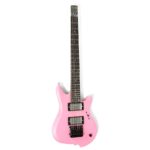 Jamstik Studio MIDI Guitar Review: The Ultimate All-in-One Solution for Guitarists and Producers
 Akai MPK Mini Plus vs. MPK Mini Play vs. MPK Mini Mk3: Complete Comparison Guide
 DJ Controllers 101: Complete Beginner’s Guide to Choosing and Using DJ Controllers
 Arturia MiniLab 3 vs. Akai MPK Mini Mk3: Expert Comparison of the Best Entry-Level MIDI Keyboards
 Arturia KeyStep Pro Review: Building the Ultimate Hybrid MIDI Controller Setup for Modern Production
 The Complete Guide to the Best DJ Controllers in 2025: From Beginner to Professional
 KRK Classic 5 Monitors and 8S2 Subwoofer Review: Perfect Starter Studio System for DJs
 Pioneer DJ DDJ-SX3 and Serato DJ Pro: Complete Guide for Mobile and Club DJs