

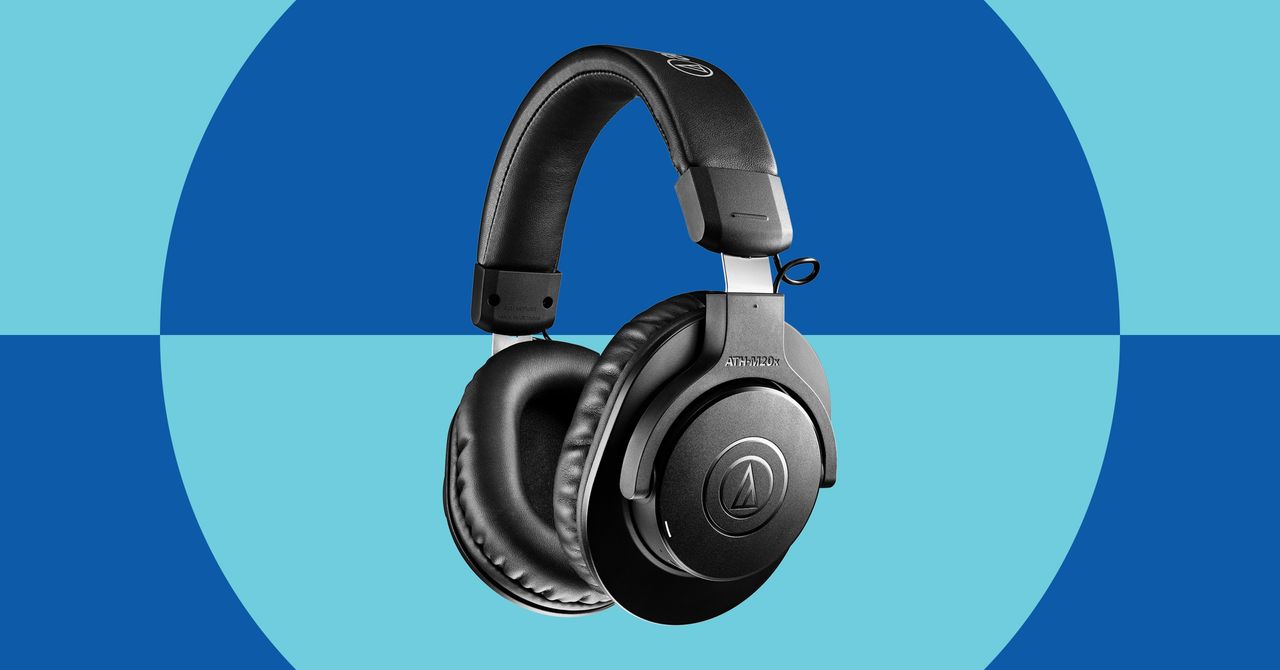
In-depth review of the Audio-Technica ATH-M20x studio headphones. Learn whether these entry-level M-series headphones deliver the performance needed for home studios, content creation, and music production at just
Audio-Technica ATH-M20x Review: Your First Studio Headphones at an Affordable
The Audio-Technica ATH-M20x represents the entry point into one of the most respected headphone lineages in professional audio. As the most affordable model in Audio-Technica’s acclaimed M-series, these headphones promise studio-grade monitoring for home studios, content creators, and anyone needing multiple pairs for tracking in project or professional environments. But does this entry-level model deliver genuine Audio-Technica quality, or should you invest more in the M30x, M40x, or M50x?
The M-Series Legacy
Audio-Technica’s M-series headphones have earned their reputation through decades of reliable service in recording studios worldwide. The line is known for delivering accurate, detailed sound at various price points. The M20x sits at the foundation of this family, which immediately raises questions: What compromises were necessary to hit this price point, and are those compromises acceptable for serious audio work?
Sound Signature and Frequency Response
The Treble Story
The most significant characteristic of the M20x is its under-emphasis in specific frequency ranges. Analysis reveals notable deficiencies around 5 kHz and particularly in the 8-10 kHz range. This creates a sound signature that’s somewhat thin and lacking in air and openness. The missing information in these upper frequencies affects the overall character in several ways.
First, the 5 kHz region is crucial for presence and clarity. When this area is recessed, sounds seem slightly distant and less immediate. The 8-10 kHz range governs sparkle, sibilance, and the fine details that bring recordings to life. The under-emphasis here means you’re missing crucial information about how your recordings actually sound.
Low-End Performance
The M20x also exhibits roll-off below 100 Hz, meaning genuine sub-bass is largely absent from these headphones. This isn’t necessarily problematic for all applications—many studio headphones don’t reproduce extreme low frequencies—but it’s important to understand what you’re not hearing. Bass-heavy genres like EDM, hip-hop, and modern pop won’t translate accurately through the M20x.
The overall bass response, while not hyped or exaggerated, lacks the weight and fullness that many users prefer. This contributes to the overall “thin” sonic character that defines these headphones.
Music Performance
When listening to music through the M20x, the frequency response characteristics become immediately apparent. The sound is noticeably thinner than the original recording, with reduced warmth and body. The missing low-frequency information robs music of its foundation, while the recessed upper frequencies prevent the music from opening up and breathing.
This doesn’t mean music sounds terrible through the M20x—it simply sounds colored and incomplete. For casual listening, many users won’t find this objectionable. However, for critical listening or making production decisions, these colorations are significant enough to cause problems.
The M20x doesn’t sound “scooped” in the traditional sense because the lower midrange (800 Hz – 2 kHz) isn’t excessively recessed. This means vocals and primary melodic content still comes through reasonably well. However, the overall impression is one of a somewhat veiled, closed-in presentation that lacks the transparency needed for reference monitoring.
Vocal and Spoken Word Applications
For podcasters, content creators, and voice-over artists, the M20x presents both advantages and challenges. The reduced low-frequency response means voices won’t sound as warm or full as they actually are. This could lead to over-compensation during recording or mixing—you might boost bass frequencies to compensate for what you’re not hearing in the headphones, resulting in recordings that sound boomy on other playback systems.
More problematic is the sibilance issue. The under-emphasis in the 8-10 kHz range means you won’t hear sibilant “S” and “T” sounds as prominently as they actually exist in your recordings. This could result in releasing podcasts or videos with excessive sibilance that you didn’t catch during editing because your headphones weren’t revealing it.
The 5 kHz dip also affects vocal clarity and presence. While this might make the headphones less fatiguing during long editing sessions, it prevents you from hearing the full character and detail of vocal performances.
Gaming Performance
While not marketed primarily as gaming headphones, many users in this price range seek multi-purpose solutions. The M20x’s performance with game audio can best be characterized as “weak.” The lacking low-frequency response under-emphasizes important aggressive tones in game audio—explosions, rumbles, and impacts lose their weight and authority.
The recessed 5 kHz and 8-10 kHz ranges also affect gaming clarity. Footsteps, spatial cues, and voice communications all suffer from reduced intelligibility. For competitive gaming where hearing subtle environmental sounds provides tactical advantages, the M20x isn’t optimal.
Build Quality and Durability
Here’s where the M20x begins to redeem itself. The build quality is impressive for the price point. The headband features substantial padding and incorporates a metal reinforcement band, suggesting these headphones can withstand regular studio use. The metal adjustment mechanisms on both sides inspire confidence and lock positively into position.
The ear cups pivot backward for flat storage but offer limited side-to-side articulation. This means they won’t fold into a compact package for travel, but they’re not particularly bulky either.
The permanently attached cable is both an advantage and limitation. On one hand, the exposed wires mean you can repair them if damaged rather than needing proprietary replacement parts. On the other hand, you can’t simply swap a damaged cable for a new one—you’ll need soldering skills or repair service.
The cable quality itself is excellent. It’s soft yet strong, with good strain relief and both 3.5mm and quarter-inch connectivity options included.
The ear pads are moderately firm—somewhat softer than the M30x but still not exceptionally plush. They’re not overly large, so users with larger ears may experience some discomfort during extended sessions. The headphones can also become quite warm during long use, which is typical for closed-back designs but worth noting.
Comfort for Extended Sessions
The M20x is reasonably comfortable for extended periods. The light weight prevents neck strain, and the clamping force is moderate—sufficient to keep them secure without creating excessive pressure. However, the heat buildup and modest ear pad size mean you’ll likely want to take breaks during marathon editing or listening sessions.
Sound Isolation
As closed-back headphones designed for studio use, the M20x provides adequate isolation for most applications. They’ll block enough external sound for recording in reasonably controlled environments and prevent enough sound leakage to avoid mic bleed during tracking with condenser microphones. However, they’re not exceptional isolators—very loud external sounds (like live drums) will still penetrate.
Specifications
The M20x features 47-ohm impedance, making them easy to drive from phones, laptops, tablets, audio interfaces, and portable recorders. No specialized amplification is required, which adds to their versatility as affordable, go-anywhere studio headphones.
The stated frequency response of 15 Hz to 20 kHz is optimistic. Testing reveals significant roll-off below 100 Hz and above 15 kHz, so the practical usable range is narrower than specifications suggest.
Who Should Buy the M20x?
Ideal Users
The Audio-Technica ATH-M20x makes sense for:
- First-time studio headphone buyers on a tight budget who need something significantly better than consumer headphones
- Multi-headphone setups where you need several pairs for tracking and don’t want to invest heavily in each pair
- General studio work where you need basic monitoring capability without critical accuracy requirements
- Podcasters and content creators who understand the limitations and can work around them
- Students and beginners learning audio production who will upgrade as their skills develop
Users Who Should Look Elsewhere
Avoid the M20x if you need:
- Mixing and mastering headphones – The frequency response is too colored for reliable mixing decisions
- Bass-heavy music production – EDM, hip-hop, and electronic producers need more accurate low-end representation
- Gaming headphones – The weak low end and reduced clarity make them suboptimal for gaming
- Critical vocal monitoring – The sibilance and clarity issues can hide problems in vocal performances
Comparison to M-Series Siblings
It’s worth noting that the M30x, M40x, and M50x all offer notably better performance with improved frequency response, build quality, and overall accuracy. While they cost more, the performance gains are substantial. If budget allows, investing in the M40x represents a sweet spot of performance and value in the M-series line.
The Bottom Line
The Audio-Technica ATH-M20x delivers exactly what it promises: entry-level access to the M-series at an affordable price. The build quality and durability exceed expectations for the price, and they’ll serve reliably in basic studio applications for years.
However, the sonic compromises are real and significant. The thin sound signature, missing bass response, and recessed clarity frequencies mean these aren’t suitable for critical applications. They’re monitoring headphones in the sense that they allow you to hear audio—but not reference monitoring headphones that reveal truth.
For your first pair of studio headphones or as additional tracking headphones in a multi-pair setup, the M20x provides solid value. They represent a meaningful upgrade from consumer headphones and will teach you what studio monitoring is about. Just understand that when you’re ready to make serious mixing decisions or do critical listening work, you’ll need to upgrade to something more accurate.
The M20x is a stepping stone, not a destination—and that’s perfectly acceptable at this price point.
Related posts:
 Audio-Technica ATH-M50X Review: The Studio Standard That Lives Up to the Hype
 Status Audio CB-1 Headphones Review: Professional Studio Performance at an Accessible Price
 Audio-Technica ATH-AVC400 Review: The Hidden Gem for Budget-Conscious Creators
 Audio-Technica ATH-M70x Review: Premium Performance with Critical Limitations
 Audio-Technica ATH-PRO700MK2 Review: Durable DJ Headphones Tested
 Headphones vs Studio Monitors: 4 Essential Considerations for Audio Production
 Shure SRH550DJ Headphones Review: Affordable DJ Monitoring with Trade-offs
 AKG K702 Reference Studio Headphones Review: Professional Studio Sound at Mid-Tier Pricing