

In-depth review of the Aumeo headphone optimizer that customizes audio based on your unique hearing profile. Discover how this device enhances DJ monitoring and music listening.
Aumeo Headphone Audio Optimizer Review: Personalized Sound Enhancement for DJs
The Personalized Audio Concept
Human hearing varies significantly between individuals. Age, genetic factors, noise exposure history, and even recent listening behavior affect how we perceive different frequencies. Standard audio equipment treats all listeners identically, ignoring these individual differences. The Aumeo audio optimizer challenges this one-size-fits-all approach by creating personalized audio profiles compensating for individual hearing characteristics.
Understanding the Aumeo System
The Core Concept
The Aumeo functions as an audio processor sitting between source devices and headphones. It analyzes user hearing through calibration tests, creates a custom audio profile compensating for frequency ranges where hearing proves less sensitive, then applies this customization in real-time to audio passing through the device.
The goal: allowing users to hear audio more similarly to how someone with “perfect” hearing would perceive it, revealing detail and nuance that individual hearing limitations might otherwise obscure.
Physical Design
The Aumeo itself is a compact device roughly the size of a portable music player or small battery bank. Physical controls remain minimal:
Ports:
- 3.5mm input jack for audio source connection
- 3.5mm output jack for headphone connection
- USB port for charging and computer connection
Controls:
- Power button
- Volume controls
- Function buttons for basic operation
The compact size enables easy pocketability or attachment to clothing during use, avoiding the bulk that would make portable use impractical.
The Companion App
Setup and calibration require the Aumeo Hub smartphone app, available for both iOS and Android platforms. The app handles:
- Hearing calibration testing
- Profile creation and storage
- Profile transfer to the Aumeo device
- Settings management
- Firmware updates
This smartphone-centric approach keeps the physical device simple while leveraging phones’ processing power and user interface capabilities for complex setup tasks.
The Calibration Process
Hearing Assessment Methodology
The calibration process determines individual hearing sensitivity across frequency ranges:
Test Procedure:
- Connect headphones to the Aumeo
- Launch the Aumeo Hub app and initiate calibration
- The app plays test tones at various frequencies through headphones
- User adjusts each tone’s volume until barely audible
- Test repeats for left and right ears independently
- App analyzes results and creates personalized profile
Test Frequency Coverage: The calibration assesses hearing across the audible spectrum, from low bass frequencies through high treble, identifying where individual hearing shows stronger or weaker sensitivity.
Per-Ear Calibration: Testing each ear independently accommodates hearing differences between ears—common with age-related hearing loss or exposure-based damage affecting one ear more than the other.
Creating Your Audio Profile
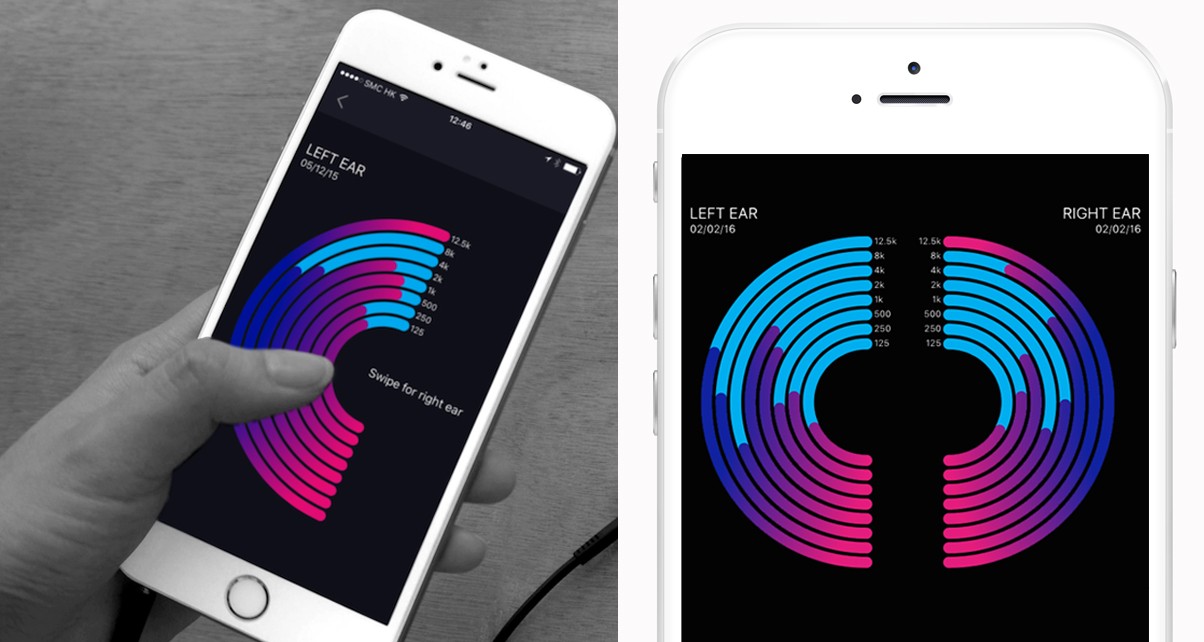
Upon completing calibration testing, the app generates a graphical representation showing frequency-specific hearing sensitivity. This visualization reveals which frequencies require boosting to compensate for reduced hearing sensitivity.
The profile then transfers to the Aumeo device itself, so audio enhancement occurs even when disconnected from the smartphone. Once calibrated, the Aumeo operates standalone—no phone connection necessary during regular use.
Profile Accuracy Considerations
The calibration provides broad assessment of hearing characteristics rather than medical-grade audiometric testing. It won’t replace proper hearing evaluation from audiologists, nor does it diagnose specific hearing conditions. Instead, it offers practical optimization for music and audio enjoyment based on detected hearing characteristics.
Users suffering significant hearing loss or specific hearing issues should consult hearing healthcare professionals rather than relying solely on the Aumeo assessment.
Real-World Performance Testing
Testing Methodology
Comprehensive evaluation involved testing the Aumeo across multiple scenarios:
Equipment: Pioneer HDJ-2000mk2 professional DJ headphones—familiar, well-understood, high-quality headphones providing known reference point.
Environments:
- Quiet home/studio settings
- Noisy club and bar DJ environments
- Moderate noise casual listening situations
Content: Varied music genres and styles revealing different aspects of audio enhancement.
The Calibration Results
Testing revealed a personal hearing profile showing:
Lower Midrange Dips: Reduced sensitivity from 125Hz to 500Hz in both ears—potentially attributable to the test headphones themselves (HDJ-2000mk2 known for slight low-mid dip) or genuine hearing characteristics in these ranges.
High-Frequency Reduction: Left ear showed reduced sensitivity in highest frequencies, likely reflecting years of standing next to drummers’ cymbals during band performances without proper hearing protection.
These results aligned with subjective awareness of hearing characteristics, lending credibility to the calibration accuracy.
Performance in DJ Applications
High-Noise Environment Advantages
The Aumeo showed strongest benefits in loud DJ booth scenarios:
Volume Reduction: In noisy bars and clubs, the enhanced audio allowed cueing tracks clearly at lower headphone volumes than normally required. Rather than cranking volume to overcome ambient noise and hear detail, the Aumeo’s frequency compensation brought forward detail that would otherwise require louder monitoring.
Hearing Preservation: Lower required monitoring volumes during gigs directly reduces hearing damage risk—crucial for professional DJs facing regular high-volume exposure.
Clarity Improvement: Beyond mere volume reduction, the frequency-specific compensation improved clarity in crowded frequency ranges, making it easier to identify beats, basslines, and other mix-critical elements during noisy performances.
Connection Setup: For DJ applications, connecting the Aumeo between DJ controller and headphones proved straightforward. The 3.5mm connections accommodate standard DJ gear, though an adapter may be necessary for controllers with only 1/4-inch outputs.
Limitations in Quiet Environments
Testing in quiet home/studio settings revealed less impressive results:
Overwhelming Presence: In quiet environments, the frequency compensation felt excessive. With no ambient noise masking detail, the boosted frequencies created overly forward, fatiguing presentation.
Unsuitable for Production: The colored audio signature—while beneficial for DJ monitoring in loud environments—proves inappropriate for critical production work requiring accurate frequency representation.
Genre Dependency: Certain musical styles benefited more than others. Older recordings from mid-20th century material sounded notably more “modern” and present with enhancement, while contemporary well-produced material sometimes felt over-processed.
Additional Use Cases
Bluetooth Capabilities
The Aumeo includes Bluetooth connectivity enabling wireless connection to source devices. This transforms the unit into more than just a hearing optimizer:
Wireless Headphone Adapter: Connect any wired headphones to the Aumeo, pair the Aumeo with a phone, and suddenly wired headphones function wirelessly—valuable for phones lacking headphone jacks or users preferring wireless convenience.
Car Audio Enhancement: Leave the Aumeo in car audio consoles, connect it to auxiliary inputs, pair phones to it, and enable Bluetooth car audio in vehicles lacking built-in wireless capability.
Making Older Music Sound Contemporary
A surprising application emerged: older recordings benefited substantially from Aumeo enhancement. Music from the 1950s-1970s, often with different production aesthetics than contemporary material, gained modern presence and immediacy with the audio compensation. This application extends beyond DJ work into general music appreciation.
Who Benefits Most from the Aumeo?
Ideal Users
The Aumeo delivers strongest value for:
Professional DJs regularly working in loud club environments where lower monitoring volumes would preserve hearing while maintaining mix accuracy.
DJs with Hearing Loss or reduced frequency sensitivity who struggle with specific frequency ranges during performances.
Music Enthusiasts wanting to maximize enjoyment of extensive music libraries, particularly including older recordings.
Wireless Adopters seeking convenient method to make quality wired headphones wireless.
Hearing Protection Conscious individuals prioritizing long-term auditory health.
Limited Appeal Scenarios
The Aumeo provides less value for:
- Users with excellent, undamaged hearing across all frequencies
- Primary home listening in quiet environments (where enhancement may overwhelm)
- Critical production work requiring accurate uncolored monitoring
- Casual listeners satisfied with standard playback
- Users uncomfortable with calibration process or technology
Practical Considerations
Battery Life and Charging
The Aumeo contains a rechargeable battery providing hours of operation per charge. USB charging enables easy recharging from any USB power source, though specific battery life varies with usage patterns and volume levels.
Size and Portability
The compact form factor enables genuine portability. The device fits easily in pockets, bags, or can clip to clothing during use. This portability proves essential for mobile DJ applications where carrying additional bulky equipment proves impractical.
Build Quality
The construction feels solid enough for regular use and transport, though this isn’t ruggedized professional gear. Reasonable care during transport and use should ensure long service life, but the device wouldn’t survive the extreme abuse that flight-cased professional gear withstands.
Bluetooth Audio Quality
Bluetooth audio transmission inherently involves compression that can affect quality. The Aumeo’s Bluetooth implementation performs adequately for casual listening and most DJ monitoring, though absolute purists might detect slight quality reduction compared to wired connections.
For DJ booth use where ambient noise exceeds any subtle Bluetooth artifacts, the wireless convenience outweighs theoretical quality concerns. For critical production work, wired connections always prove preferable.
Value Proposition
Investment Consideration
The Aumeo’s pricing positions it as an accessory for serious users rather than impulse purchase for casual listeners. The investment makes sense when:
- Regular DJ work in loud environments justifies hearing preservation benefits
- Existing hearing limitations noticeably impact music enjoyment or performance
- Additional wireless functionality provides practical value
- Interest in maximizing audio quality and personalization runs high
Comparison with Alternatives
Few direct alternatives exist for personalized hearing-based audio optimization. Some high-end hearing aids include music programs, but at dramatically higher cost. Generalized audio enhancers exist, but without personalization. The Aumeo occupies a somewhat unique market position.
The Subjective Nature of Audio Enhancement
A crucial consideration: audio enjoyment remains profoundly subjective. What one listener experiences as enhancement, another might perceive as undesirable coloration. The Aumeo’s benefits depend heavily on:
- Individual hearing characteristics
- Personal sound preferences
- Listening environment
- Music genre and production style
- Whether hearing damage/loss exists
Users should approach the Aumeo with realistic expectations that benefits may vary significantly based on these personal factors.
Final Assessment
The Aumeo represents innovative thinking about audio personalization, moving beyond one-size-fits-all approaches to accommodate individual hearing differences. For specific use cases—particularly professional DJs working in loud environments—the device delivers genuine benefits in hearing preservation and monitoring clarity.
The personalized calibration process, while not medical-grade assessment, provides useful customization revealing how individual hearing differs from idealized response. The ability to reduce required monitoring volumes while maintaining clarity directly addresses one of professional DJing’s occupational health challenges.
However, the Aumeo isn’t universally beneficial. In quiet environments, the enhancement may overwhelm. For music production requiring accurate monitoring, the colored presentation proves inappropriate. Users with excellent hearing may perceive minimal benefits.
The additional wireless functionality adds practical value beyond the core audio enhancement mission, providing flexibility for various listening scenarios and modernizing wired headphones.
For professional DJs serious about hearing preservation while maintaining performance quality, the Aumeo delivers worthwhile benefits. For casual users or those without specific hearing concerns, the value proposition proves less compelling. As with any audio equipment, personal trial (when possible) provides the best determination of whether the Aumeo’s approach suits individual needs and preferences.
Related posts:
 AKG K361 Headphone Review: Premium Sound at an Affordable Price
 Fosi Audio PH05 Headphone Amplifier Review: Professional Multi-Output Performance Without Breaking the Bank
 Adam Audio A4V Studio Monitors Review: Smart Speakers with Custom Sound for DJs and Producers
 M-AUDIO HDH40 Headphone Review: A Real Budget Option?
 Sennheiser HD599 SE Headphone Review: Accurate Bass & Open Back
 Slate VSX Headphones Review: How Do They Sound WITHOUT the Software?
 Kiwi Ears ARDOR ANC Headphone Review: Surprising Coaxial Driver Tests
 SKAA Pro Review: The Future of Wireless DJ Audio?