

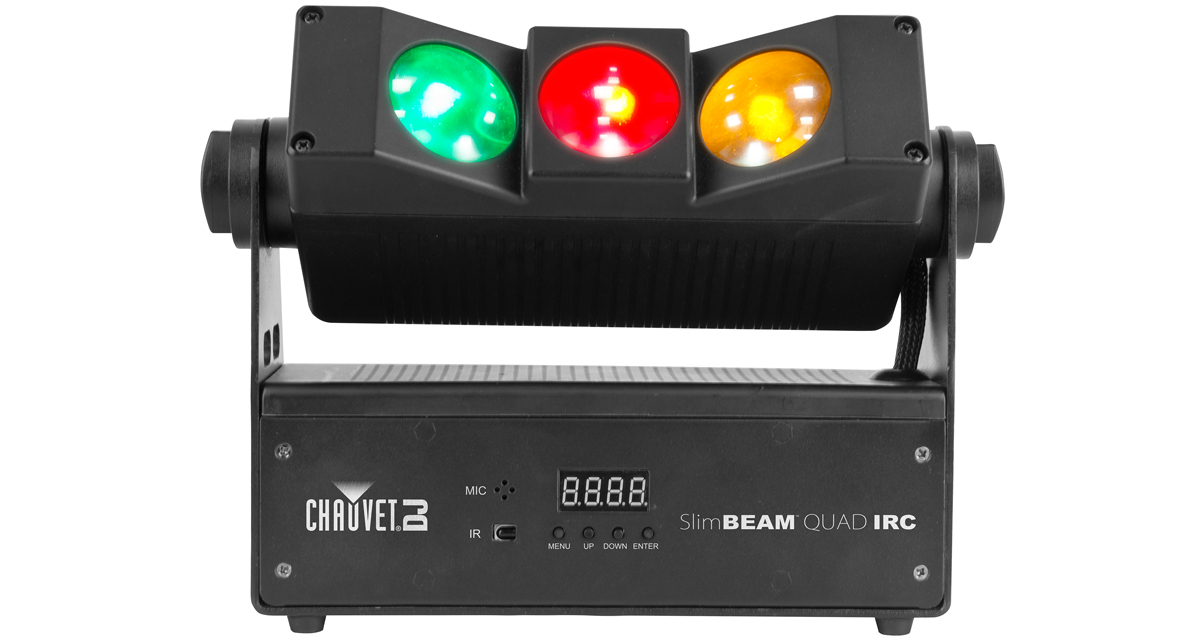
Comprehensive review of the Chauvet DJ Slim Beam Quad IRC lighting fixture. Discover how this compact, static LED fixture delivers impressive effects for mobile DJs and small venues.
Chauvet DJ Slim Beam Quad IRC Lighting Review: Compact Versatility for Mobile DJs
The Evolution of Mobile DJ Lighting
Mobile DJ lighting has transformed dramatically over the past decade. Heavy, hot, power-hungry incandescent fixtures have given way to lightweight, cool-running LED alternatives. The Chauvet DJ Slim Beam Quad IRC exemplifies this evolution, packing substantial lighting capability into a surprisingly compact unit that belies expectations set by promotional materials and packaging.
First Impressions: Smaller Than Expected
Upon unboxing, the first striking characteristic of the Slim Beam Quad IRC is its modest physical size. Promotional imagery and even the packaging dimensions suggest a larger fixture, creating pleasant surprise when handling the actual unit. This compact footprint delivers significant practical advantages for mobile DJs working with limited vehicle space and stage real estate.
Build Quality and Construction
The fixture features solid metal construction that inspires confidence in durability. Unlike plastic-bodied budget lighting, the metal housing suggests long-term reliability essential for working DJs. Despite the robust construction, the unit remains lightweight enough for easy handling during setup and teardown—a crucial consideration for mobile DJs repeatedly loading and unloading equipment.
The build quality extends to finishing details. The metal surfaces show quality powder coating resistant to scratches and wear. Edge treatments and joints display careful manufacturing attention rather than the rough edges and gaps plaguing cheaper alternatives.
The Static LED Concept
Understanding No-Movement Design
Unlike moving heads or scanners that pan, tilt, rotate, or employ moving mirrors, the Slim Beam Quad IRC takes a fundamentally different approach: completely static operation. The three LED arrays remain fixed in position, creating light beams that never physically move. This design choice eliminates mechanical complexity, reducing potential failure points and maintenance requirements while keeping operation completely silent.
At first consideration, static lights might seem limiting. However, the Slim Beam Quad IRC compensates through programming and beam characteristics that create substantial visual interest despite no mechanical movement.
Three Focused LED Beams
The fixture incorporates three distinct LED light sources, each producing tightly defined beams. LED technology enables sharp beam edges and intense color saturation impossible with traditional incandescent sources. The tight beam definition means light projects with minimal spill, creating dramatic highlighting and effect possibilities.
The three-beam configuration allows for individual control of each light source (depending on DMX programming), enabling patterns, sequences, and color combinations that add variety beyond simple static illumination.
Mounting and Positioning
Versatile Mounting Options
The Slim Beam Quad IRC accommodates multiple mounting approaches:
Floor Placement: Rubber feet on the base allow direct floor mounting, ideal for uplighting applications. Place fixtures behind DJ setups to illuminate backdrops, walls, or architectural features.
Truss Mounting: Standard mounting brackets enable secure truss attachment via the integrated mounting points. This positions the lights overhead for downlighting dance floors or stage areas.
Adjustable Angle: A unique feature allows 18-degree angle adjustment through a manually positioned joint. This limited but useful range enables fine-tuning beam direction for either mounting configuration without requiring complex mounting hardware or continuous adjustment mechanisms.
Front-Ported Design Advantages
While not immediately obvious, the three visible LED assemblies represent front-facing beam projection—all light output directs forward. This contrasts with some lighting designs incorporating rear or side ventilation that restrict placement options. The front-facing design allows close wall placement and tight grouping of multiple units without interference concerns.
Control Options and Programming
Built-In Control Panel
Located discreetly on the fixture, the control panel provides direct programming access through a straightforward interface:
Menu Button: Cycles through available control modes and settings Up/Down Buttons: Adjust values and select options Enter Button: Confirms selections
The small LED display provides feedback about current settings, though viewing the display during performances in dark environments can prove challenging without additional illumination.
Standalone Programs
The fixture includes ten pre-programmed light shows accessible without external controllers. These programs vary in complexity, speed, and visual character:
Static Programs: Several programs maintain constant colors or color combinations without movement or change Sequential Programs: Other programs cycle through colors, patterns, or intensity changes in programmed sequences Speed Variations: Within programs, speeds vary from slow, ambient changes to rapid, energetic sequences
For DJs working without DMX control or seeking plug-and-play operation, these built-in programs provide immediate usability. Simply select a program, adjust overall intensity if desired, and let the fixture run automatically.
Sound-to-Light Functionality
An integrated microphone enables sound-reactive operation, where the fixture responds to audio—typically bass frequencies and kick drums. In this mode, the selected program’s changes and color shifts sync to music beats, creating dynamic lighting that appears to “dance” with the music.
Sound-to-light proves particularly valuable for mobile DJs lacking DMX infrastructure. Setup becomes utterly simple: position the fixtures, power them on, select sound-reactive mode, and the lights automatically respond to the music throughout the event.
DMX Control Capabilities
For users employing DMX lighting control systems, the Slim Beam Quad IRC offers professional integration:
DMX In/Out: Three-pin XLR connectors enable standard DMX signal chain connection Daisy-Chaining: Multiple fixtures link together, reducing cable runs and complexity Channel Configuration: Various DMX modes provide different levels of control granularity Professional Integration: DMX control enables precise programming, synchronization with other fixtures, and integration into complex lighting designs
The fixture supports both basic and advanced DMX modes, accommodating users from DMX beginners to experienced lighting programmers.
Infrared Remote Control
While not included in the package, the Slim Beam Quad IRC responds to an optional IRC (Infrared Remote Control) remote. The IRC designation in the product name indicates this compatibility. The optional remote provides convenient control over:
- Program selection
- Color selection
- Strobe effects
- Blackout function
- Sound-to-light activation
For users investing in multiple Chauvet IRC-compatible fixtures, a single remote controls the entire rig—a worthwhile convenience upgrade.
Power and Connectivity
Linking Multiple Fixtures
Beyond DMX connectivity, the Slim Beam Quad IRC offers practical power-linking capability. Both power input and power output connections enable linking multiple fixtures:
Power Daisy-Chaining: Connect the power output of one fixture to the power input of the next, reducing required power outlets and cable runs
Combined with DMX: Simultaneous power and DMX linking through connected fixtures dramatically simplifies larger setups
This feature particularly benefits mobile DJs creating backdrop or uplighting arrays. Position multiple fixtures, link power and DMX between them, and run only a single power cable and single DMX cable to the entire array.
Power Requirements
LED technology keeps power consumption modest compared to traditional lighting. The fixture operates from standard AC power without requiring heavy-duty circuits or complex power management. Multiple fixtures can typically run from standard venue power without tripping breakers—a valuable characteristic when working in older buildings or residential venues with limited power infrastructure.
Practical Applications
Uplighting Backdrops
Perhaps the most common application for mobile DJs involves uplighting backdrops or walls behind DJ setups. Position fixtures on the floor behind and slightly in front of fabric backdrops or architectural walls, aim them upward, and the tight beams create dramatic vertical lighting.
Using multiple fixtures across the backdrop width creates even more impressive effects. The built-in programs can run across linked fixtures, creating moving patterns and color changes across the entire backdrop despite each individual fixture remaining static.
Dance Floor Downlighting
Mount fixtures overhead on truss, aim them downward at the dance floor, and the three bright beams create distinct “spots” of colored light. In sound-reactive mode, these spots pulse and change with the music. Combined with haze or fog effects, the tight beams become visible in the air, adding three-dimensional visual interest.
For small to medium dance floors, two or three Slim Beam Quad IRC fixtures provide substantial impact without requiring larger, more expensive moving-head fixtures.
Architectural Highlighting
The tight, intense beams excel at highlighting architectural features:
- Columns
- Archways
- Textured walls
- Stage elements
- Decorative features
Place fixtures at appropriate angles, select colors complementing the venue or event theme, and the static beams effectively highlight features that might otherwise disappear in general lighting.
Ambient Venue Lighting
Not every application requires dramatic effects. The fixture’s static color modes create effective ambient venue lighting. Select colors matching event themes or creating desired moods, set the fixture to static mode, and it functions as sophisticated uplighting or color wash without distraction from constant changes and movements.
Sound Performance
Silent Operation Advantage
The absence of moving parts delivers a crucial benefit: completely silent operation. Moving-head fixtures, scanners, and even some color-changing fixtures produce mechanical noise from motors, fans, or moving components. In quiet venues, during speeches, or in recording situations, this noise proves problematic or even unacceptable.
The Slim Beam Quad IRC operates in utter silence. No fan noise, no motor sounds, no mechanical clicking or buzzing—just light. This characteristic makes it suitable for:
- Recording studios and video production
- Corporate events with presentations
- Acoustic music performances
- Intimate venues where mechanical noise would distract
- Any situation where silence matters
Limitations and Considerations
What It Isn’t
Understanding the Slim Beam Quad IRC’s limitations proves as important as recognizing its strengths:
Not a Moving-Head Replacement: The static design cannot replicate moving-head effects. No sweeping beams across rooms, no circling patterns, no dynamic movement through space.
Not a Color Wash: The tight beams don’t flood areas with color. For wall-washing or broad color coverage, traditional wash fixtures or panels serve better.
Limited Dimming Range: LED fixtures sometimes exhibit limited dimming ranges, particularly at very low intensities. This fixture maintains good brightness control but may not dim to absolute darkness while remaining on.
Remote Not Included: Despite IRC compatibility, the remote represents an additional purchase. Budget-conscious buyers should factor this cost if remote control is desired.
Ideal Use Cases
The Slim Beam Quad IRC excels in specific scenarios:
- Small to medium venues
- Mobile DJ setups
- Budget-conscious lighting upgrades
- Quiet environments requiring silent operation
- Simple plug-and-play requirements
- Backdrop and uplight applications
- Dance floor accent lighting
Value Proposition
Price-to-Performance Ratio
The Slim Beam Quad IRC occupies the entry-to-mid-level pricing tier while delivering performance and build quality often associated with more expensive fixtures. For mobile DJs building initial lighting rigs or expanding existing setups, the combination of quality construction, multiple control options, and practical features represents solid value.
Longevity Expectations
LED technology eliminates traditional lamp replacement, dramatically reducing long-term ownership costs. Metal construction suggests physical longevity sufficient for years of mobile use. The absence of moving parts removes common failure modes plaguing more complex fixtures.
Barring significant physical damage or catastrophic electrical failure, these fixtures should provide reliable service throughout many years of regular use—a key consideration when calculating true cost-of-ownership beyond initial purchase price.
Conclusion
The Chauvet DJ Slim Beam Quad IRC successfully addresses a specific niche in mobile DJ lighting: providing quality, versatile, compact lighting effects without mechanical complexity or significant expense. The static LED design trades movement for reliability and silence while built-in programs, sound-reactive capability, and DMX control offer appropriate flexibility for various skill levels and applications.
For mobile DJs, the compact size, linking capabilities, and multiple mounting options create practical advantages during transportation and setup. The professional build quality and metal construction justify investment over cheaper plastic alternatives, while the modest price point keeps the fixtures accessible for DJs operating on realistic budgets.
The Slim Beam Quad IRC won’t replace moving heads for users requiring dynamic beam movement through space. However, for uplighting, accent lighting, and creating color and pattern effects in small to medium venues, it delivers impressive results. The utterly silent operation adds unique value for specific applications where mechanical noise proves problematic.
Mobile DJs seeking reliable, versatile, compact lighting effects should seriously consider the Chauvet DJ Slim Beam Quad IRC. It represents the type of well-executed product that performs its intended function without pretending to be something it isn’t—exactly what working DJs need.
Related posts:
 Nanoleaf Lighting Review: Level Up Your DJ Setup with Music-Responsive Lights
 Pioneer DJ Opus Quad Review: A New Benchmark in All-in-One DJ Systems
 Pioneer OPUS-QUAD Review – The Standalone DJ System Redefining All-in-One Performance
 SOUNDBOKS Lightboks Review: Smart Party Lighting That Bridges Consumer Simplicity and Professional Capability
 Pioneer DJ Opus Quad Review: The Ultimate 4-Channel Standalone Solution
 Pioneer DJ DDJ-FLX10 Review: Next-Gen Stems, Lighting, and Mixing Innovation
 Roland DJ-707M Review – The Swiss Army Knife DJ Controller for Mobile Events
 Pioneer DJ DDJ-SX3 and Serato DJ Pro: Complete Guide for Mobile and Club DJs